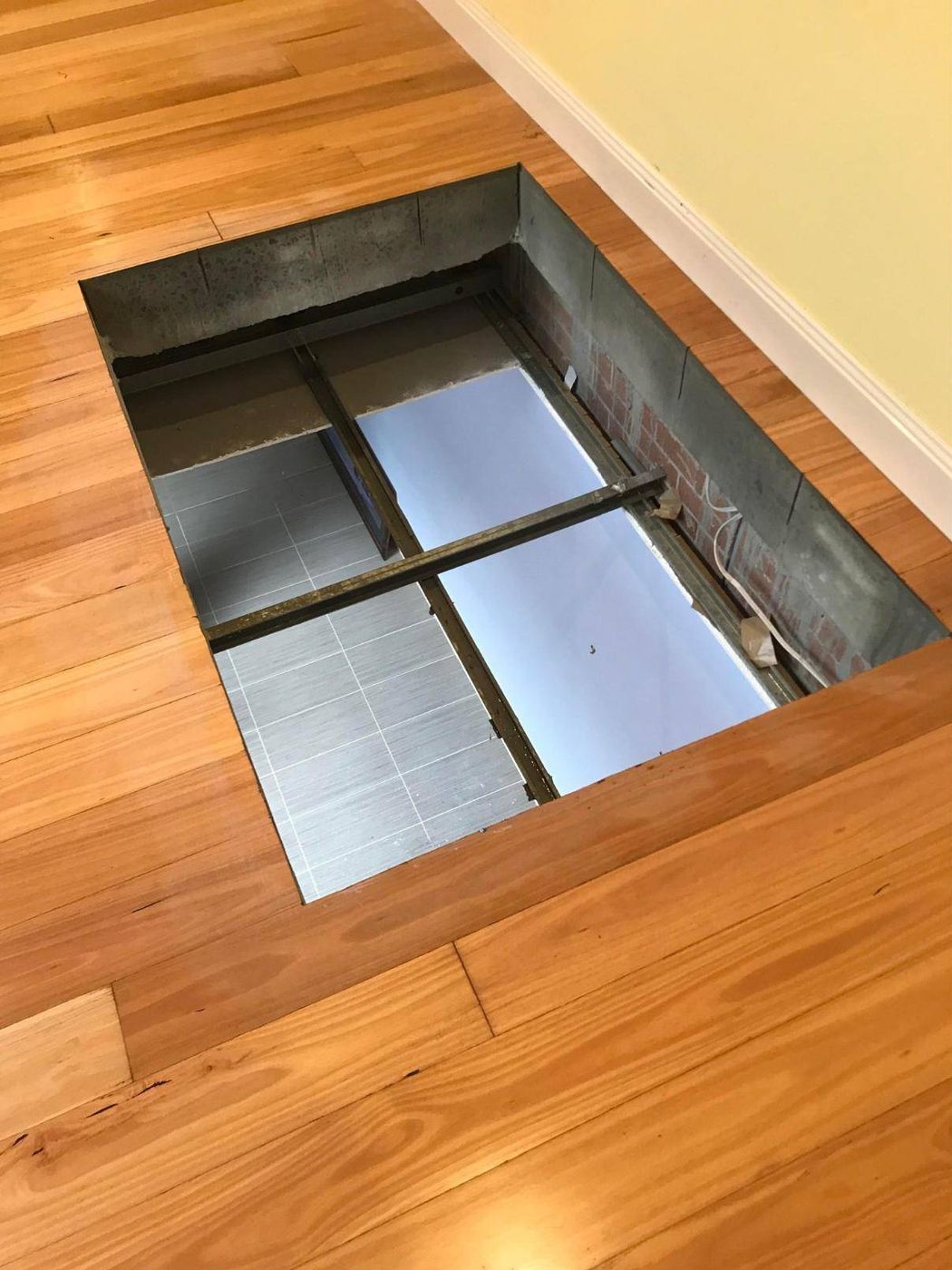
Every saw blade has a maximum depth. A diamond wire saw doesn't. A continuous loop of steel cable studded with diamond beads is wrapped around or threaded through the concrete and pulled through it under tension by a hydraulic drive. As it runs, it cuts through concrete and reinforcing steel alike.
That makes wire sawing the method for the biggest and most difficult cuts: thick foundations and footings, columns and transfer beams, piers, bridge decks, machine bases and heavily reinforced structures. Because the wire wraps around the section, it also handles irregular shapes that a straight blade can't follow.
Wire sawing is quiet, low-vibration and wet-cut. It is well suited to demolition in occupied buildings or close to sensitive structures where breaking would be unacceptable.
Controlled demolition of heavy structures
On demolition and alteration works, wire sawing lets heavy elements be cut into large, liftable blocks and removed by crane instead of being broken up in place. That reduces noise, dust and vibration and can significantly cut the time on site.
Typical work includes cutting out columns and beams, removing footings and pile caps, and sectioning large slabs and walls.
Planning a wire saw job
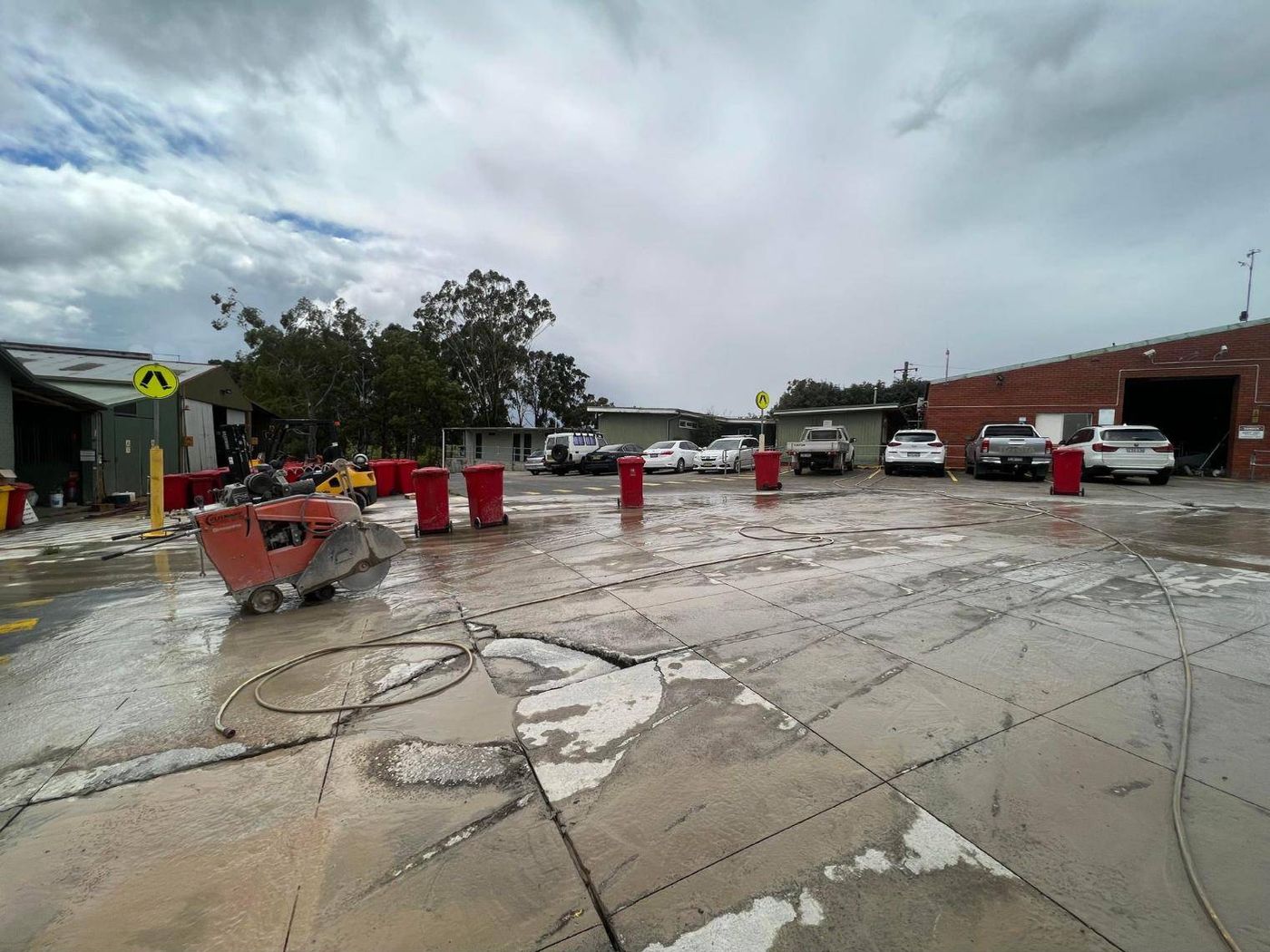
Wire sawing needs planning: access holes are cored for the wire to pass through, the section is supported and rigged for lifting, and the cut sequence is agreed with your engineer and builder.
We'll walk the job, look at the drawings and work through the method with you before quoting.